
Solar energy is one of the most accessible clean energy investments a BC homeowner can make in 2026. Advances in panel efficiency, maturing battery storage technology, and the BC Hydro rebate program have combined to make solar more practical and more affordable than it has ever been. Here is a current look at the key pros and cons.
THE PROS OF SOLAR ENERGY IN 2026
Lower Costs & Higher Efficiency
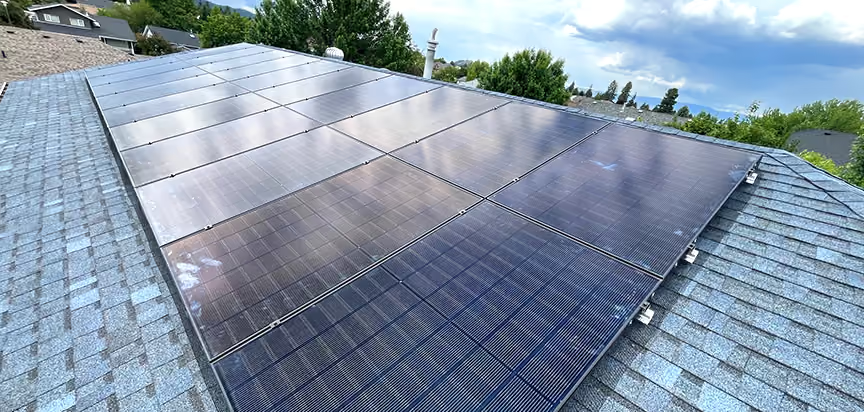
Modern solar panels convert more sunlight into electricity than ever before. Residential panels available in 2026 reach 22 to 23% efficiency, and bifacial technology, which captures reflected light from both sides of the panel, has moved from a premium option to the mainstream. Net metering allows homeowners to send surplus power back to the grid for credit, further reducing electricity bills. With BC Hydro rates continuing to rise, locking in your own energy production becomes more financially attractive every year.
BC Hydro Rebates Up to $10,000
BC Hydro offers residential homeowners up to $5,000 toward solar panel installation and an additional up to $5,000 for a battery storage system enrolled in the Peak Saver program; a combined $10,000 that can offset 25 to 35% of a typical system's cost. The solar rebate is calculated at $1,000 per kilowatt of installed capacity, and the battery rebate at $500 per kilowatt-hour of storage. As of June 2026, installations must be completed by a certified Home Performance Contractor Network (HPCN) member to qualify. Riverside Energy Systems handles the entire rebate application process on your behalf.
Important
Hydro's current net metering rate closes to new customers on July 1, 2026. Homeowners who begin the process now can still access it. Get a free quote today.
Energy Independence & Blackout Protection
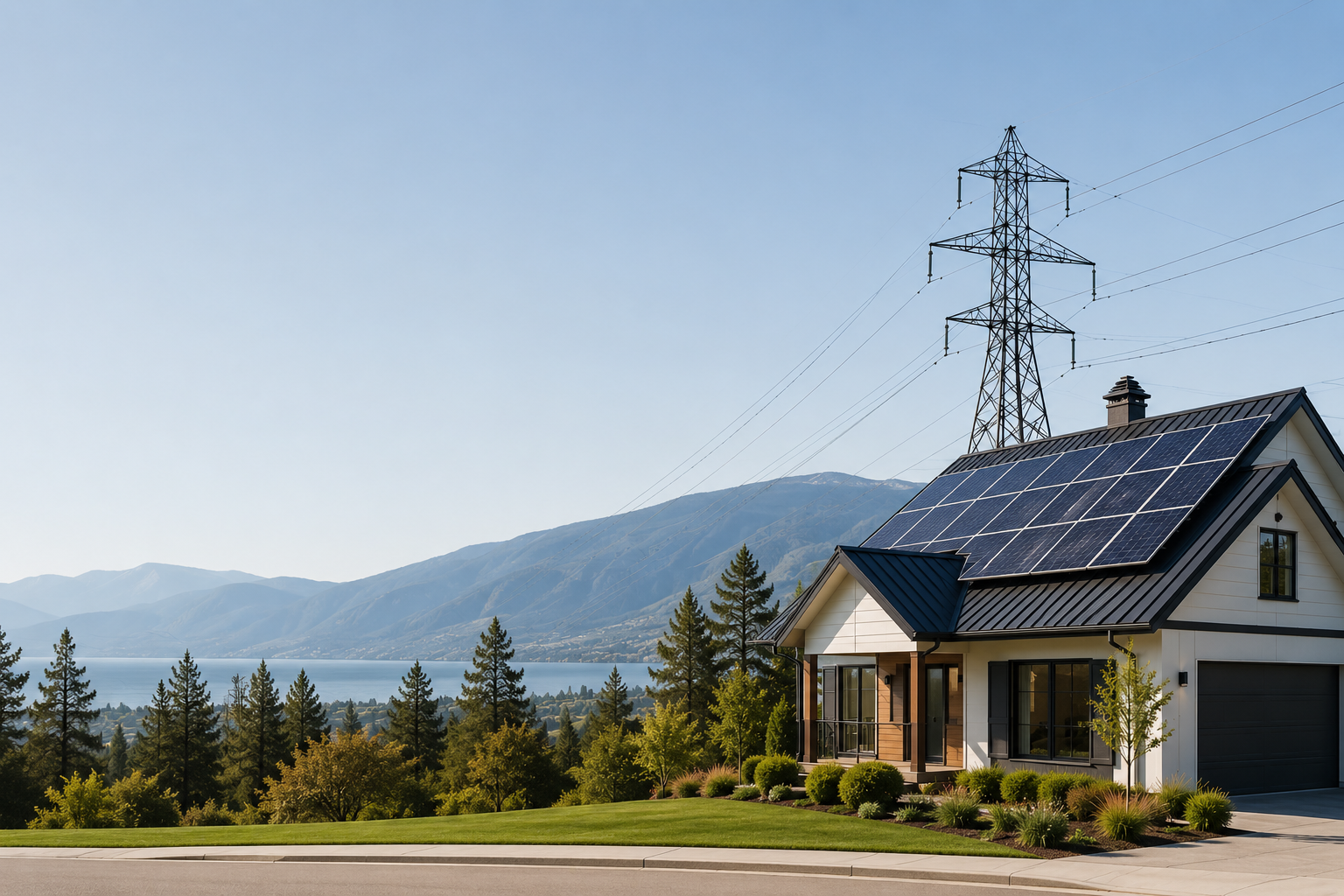
Battery storage systems allow you to keep the lights on when the grid goes down. During wildfire season or winter storms, both realities in BC, a solar-plus-battery system provides reliable backup power without a generator. Modern home batteries can power essential loads for 12 to 24+ hours depending on system size and consumption.
Increased Home Value
Homes with solar installations sell faster and at higher prices than comparable homes without them. With energy costs rising and buyers increasingly focused on long-term operating costs, solar is becoming a meaningful factor in purchasing decisions; particularly in the Fraser Valley and other high-growth BC markets.
Eco-Friendly & Sustainable
A residential solar installation in BC eliminates an average of two to three tonnes of CO2 emissions per year. Over a 25-year system lifespan, that's the equivalent of taking a car off the road for several years. For homeowners who care about their environmental footprint, solar is one of the highest-impact changes they can make at the household level.
Get up to $10,000 in rebates from BC Hydro: here's how.
THE CONS OF SOLAR ENERGY IN 2026
Upfront Cost Without Incentives
A complete residential solar system with battery storage typically costs between $15,000 and $30,000 before rebates, depending on system size and your home's electrical setup. The BC Hydro rebate can offset $5,000 to $10,000 of that, and financing options are available for the remainder. Most BC homeowners see a payback period of 8 to 12 years and decades of reduced bills after that.
Weather and Seasonal Variation
Solar panels generate electricity from daylight, not direct sunlight, so they do produce power on cloudy days; just less of it. In BC's Interior and Lower Mainland, energy production is lower in winter months and higher through spring and summer. Battery storage helps bridge that gap. A properly sized system accounts for your local climate and seasonal patterns from the start.
Battery Storage Adds Cost
True energy independence, i.e. the ability to keep your home powered through a grid outage, requires battery storage, and batteries add to the total project cost. While battery prices have declined significantly over the past five years, a quality home battery system remains a meaningful investment. The BC Hydro rebate covers up to $5,000 of battery costs, which changes the calculation considerably for most homeowners.
Roof Compatibility
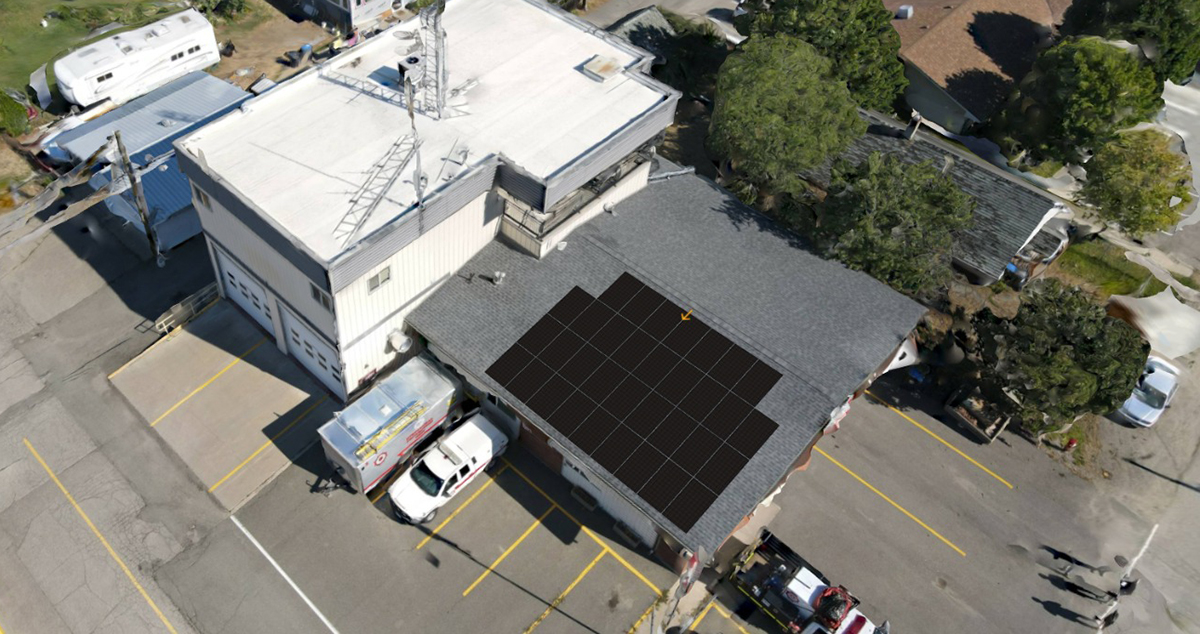
Not every roof is ideal for solar. Factors that affect suitability include shading from trees or neighbouring buildings, roof orientation and pitch, and the condition and material of your roofing. A site assessment will identify whether your home is a strong candidate and what, if anything, would need to be addressed before installation.
CONCLUSION
In 2026, the combination of improved panel technology, mature battery systems, and the BC Hydro rebate makes solar a financially sound option for most BC homeowners who own a detached home in BC Hydro territory. The upfront cost is the primary barrier, and the rebate program goes a significant way toward reducing it, but the window to access BC Hydro's current net metering rate closes July 1, 2026.
For a no-pressure assessment of whether solar makes sense for your home, contact Riverside Energy Systems for a free quote.


.webp)
.webp)
.webp)
.webp)